The Default Hour Is a Guess: Finding Your Society's Real Turnout Window
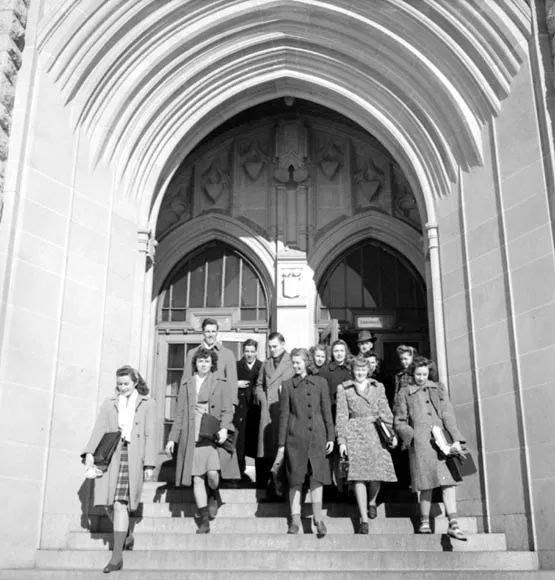
Photo: BiblioArchives / LibraryArchives from Canada, CC BY 2.0, via Wikimedia Commons
Every society has a founding myth. Ours, usually, is that the event starts at 6pm. It is on the poster. It is in the chat. It has been on the poster and in the chat since a committee that graduated two years ago booked the room. Nobody remembers choosing it. It simply became the default, like a ringtone you never changed.
At LSE UniSoc, we are not against a reliable calendar invite. But the default hour deserves a second look. Turnout is not a personality test for your members. It is a behaviour shaped by teaching blocks, library rhythms, train times, part-time work and the small matter of whether anyone has eaten since lunch. If your society is running the same slot every week and wondering why the room feels half-full, the schedule may be doing more work than the publicity.
The committee clock is not the member clock
Committee members are super-users. They arrive twenty minutes early with a laptop, a tote bag and a plan for the door. They stay until the chairs are stacked. That enthusiasm is useful, but it makes committees terrible at judging a start time.
Members decide whether to come much later, often while standing outside a seminar room or staring at a library screen. At 5:47pm, the question is not 'Do I value this society?' It is 'Can I get there, eat something, and still be useful tomorrow?' A 6pm start sits in an awkward gap: too late for a quick post-lecture dash, too early for dinner, and just close enough to the evening commute to make the journey feel like a small expedition.
Three timetables you are actually competing with
The teaching day
LSE timetables are not built around society convenience. Lectures and seminars cluster through the day, and the late afternoon slot is often where the day has already used up a student's decision-making energy. If a seminar finishes at 5pm on the Strand side of campus, a 6pm event in a room off Houghton Street is technically possible. In practice, it means no food, no pause, and no chance to switch from essay mode to society mode.
The library tide
The library has its own weather. There is the focused afternoon stretch, the 5pm slump, the 6pm hunger signal and the 7pm second wind. A 6pm event asks people to leave a good study session at exactly the moment they are either flagging or finally making progress. Some will choose the event. Many will choose the desk. That is not disloyalty; it is energy management.
The London commute
Our campus is not a campus in the green-and-quadrangle sense. Members come from Stratford, Wembley, Croydon, Kent and everywhere the Tube map reaches. At 6pm, Holborn and Temple are already busy, and the difference between a 5:45 departure and a 6:15 one can be the difference between arriving on time and arriving annoyed. Add part-time jobs, caring responsibilities and the cost of yet another journey, and the default hour starts to look less neutral than it did on the room booking form.
Measure the right things
A headcount is useful, but it is not the whole story. For a one-term experiment, track four numbers: how many people signed up, how many actually arrived, when they arrived, and how long they stayed. Add a simple question at sign-up: 'What time could you realistically arrive?' Not 'What time do you prefer?' Preferences are polite. Constraints are truthful.
You can run this on a free spreadsheet and a door tally. No new budget, no fancy analytics, no committee member standing outside with a clipboard looking like a market researcher. Just a consistent record of what happened.
The experiment: three weeks, three slots
Pick one recurring event with a stable format: a weekly talk, a social, a study session. For three weeks, keep the content, room, publicity and format as similar as you can. Change only the start time. Use 5:15pm, 6pm and 6:45pm as a simple test set, or shift the slots around your own current default if your room booking makes that easier.
Do not run the test during a deadline crush, a major society clash or a week when the Tube is doing its annual impression of a suggestion. Note those things down anyway. A single quiet week is not a verdict; three comparable weeks are a conversation starter.
What the results can tell you
If the earlier slot brings more first-timers and fewer late arrivals, you have found something useful. If the later slot works better for socials but not for talks, split your programme: earlier for information, later for atmosphere. If 6pm still wins, keep it, but stop treating it as invisible. Publish an arrival window, say clearly when the formal bit starts, and make the first ten minutes genuinely low-pressure.
The point is not to chase the perfect hour forever. The point is to stop spending publicity money on a slot nobody has checked. A society that audits its calendar is doing access work, not just event planning. It is saying that commuting, caring, working and studying are part of student life, not obstacles to be guilted out of the way.
So this term, put the default hour on trial. Let the spreadsheet have an opinion. It is cheaper than another round of posters, and far more useful than another committee debate that ends with someone saying, 'But we have always done 6pm.'