Meet Me By the Door: The Buddy System That Beats the Awkward Ten Minutes
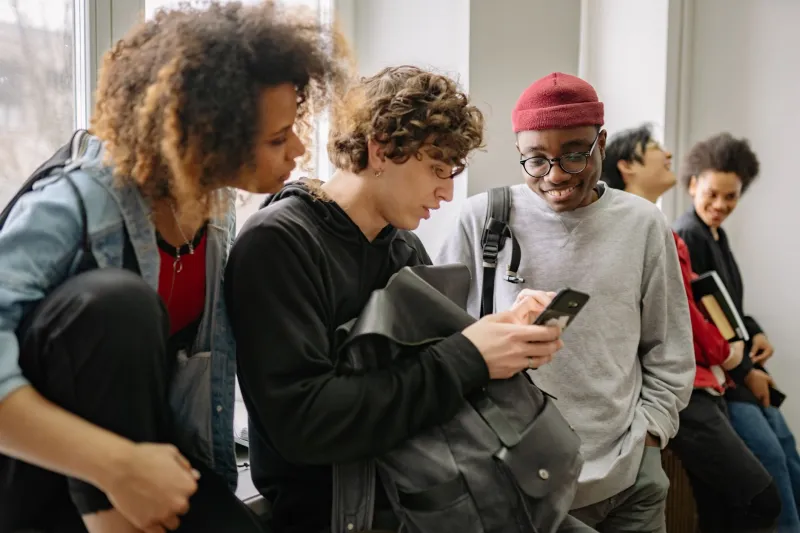
Every society has a version of the same photograph. Week Six, term one, a room in the Saw Swee Hock with the chairs in a half-circle, and one person standing by the door with their coat still on. They came. They signed up. They are, at this precise moment, deciding whether to stay.
That decision is not about your speaker. It isn't about the budget or the poster or whether the biscuits were the good ones (they were, well done). It's about whether anyone in the room has been briefed to expect them. This is the whole argument for a buddy system, and it's a lot less work than most committees assume.
Why the doorstep does all the damage
Societies spend weeks on the event and roughly nine seconds on the arrival. But arrival is the whole game. A returning member walks in and sees four people they already know. A first-timer walks in and sees a room that appears to be mid-conversation without them. Nothing hostile has happened. It still feels like a closed door.
The fix is simple and slightly unglamorous: give every new attendee a named human before they turn up. Not a committee email address. Not a group chat link. A person, with a name, who is expecting them, and who has been told one thing about them in advance.
The sign-up form that takes four minutes to build
Keep it to three questions. Any more and you're writing a census.
- What's your name, and what are you studying?
- Is this your first UniSoc event?
- One thing you'd happily talk about for ten minutes that isn't your degree.
That third question is doing the heavy lifting. It gives the buddy something to open with that isn't "so, what do you do?", which is a question that makes half of LSE freeze and the other half start reciting their CV.
Cap each event at a workable number of first-timers, put the form link in the same place you put the ticket link, and close it 48 hours before the event. Buddies need a day to read the list and send a message that doesn't sound like it was written at 3am.
The brief, kept under 200 words
Don't write a policy document. Write something a second-year can read on the Central line.
Your buddy brief:
- Message them the day before. One line: "I'm X, I'll be the one in the green coat by the entrance at 6:45. Come find me, I'll introduce you to a few people."
- Meet at a landmark, not in the room. The main entrance, the bottom of the stairs, the corner by the coffee place. Somewhere a nervous person can loiter without looking like they're loitering.
- Ask about the thing from the form. Not their module choices.
- Introduce them sideways, not upward. Don't parade them round the committee. Introduce them to one other person at their level and then step back.
- Don't tour-guide. Nobody needs a history of the society. They need a conversation.
- Text them the next day. Two sentences. That's the whole retention strategy.
One buddy, two or three first-timers
Strict one-to-one pairing sounds tidy and falls apart the moment two people drop out. Aim for one returning member to two or three newcomers. Enough that the buddy isn't carrying a single anxious conversation for ninety minutes, small enough that everyone gets a name and eye contact.
And rotate the buddies. If the same six people buddy every event, you haven't built a welcome system, you've built a VIP lane with extra steps.
The clique trap, and how to spot it
Buddy systems go wrong in a specific way: the buddy table becomes the committee table, the newcomers orbit it for one event, and then the whole thing calcifies. Three safeguards help.
- Buddies don't sit together. Spread them across the room, ideally each next to their own newcomers.
- Buddies aren't gatekeepers. Nobody should need a buddy's permission to join the group chat or the WhatsApp thread. They join on the night.
- Buddies are volunteers, not martyrs. Give them a free drink token or first refusal on the next social. Recognition costs very little and prevents the whole scheme collapsing in term two when everyone gets busy.
Measuring the thing that actually matters
Attendance on the night tells you almost nothing. What you want is the second-visit rate: of the first-timers at Event A, how many turn up to Event B?
You don't need software for this. Keep one spreadsheet with a column for name, event, buddy and whether they came back. Ask buddies to flag their newcomers at the door, or simply note it yourself from the sign-in. Do this for two events and you have a real number.
A reasonable target for a healthy society is somewhere around a third coming back unprompted. If it's much lower, the problem is rarely the programme. Look at the first fifteen minutes instead. If it's higher, congratulations, you've accidentally built a pipeline and should probably write it down for the next committee.
The bit nobody writes into the handover doc
Sometimes the buddy is the nervous one. Second-years get wobbly too, especially in a room where they're suddenly the person expected to know things. Pair newer buddies with an experienced one, keep the brief short, and make it socially acceptable to say "I only stayed for an hour" afterwards.
The goal isn't a flawless welcome operation. It's that nobody in that half-circle by the door is left quietly deciding against you. One name, one message, one introduction. That's the entire system, and it will outlast most of your marketing budget.